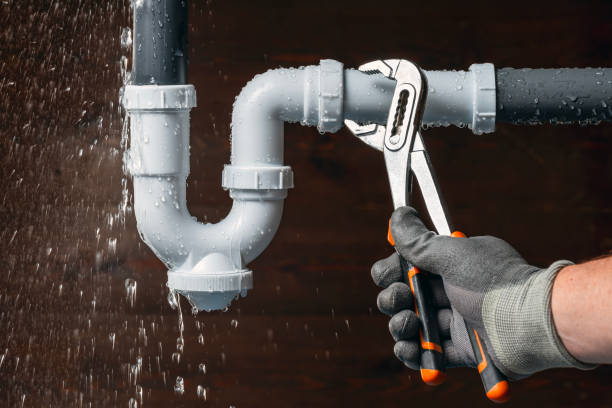
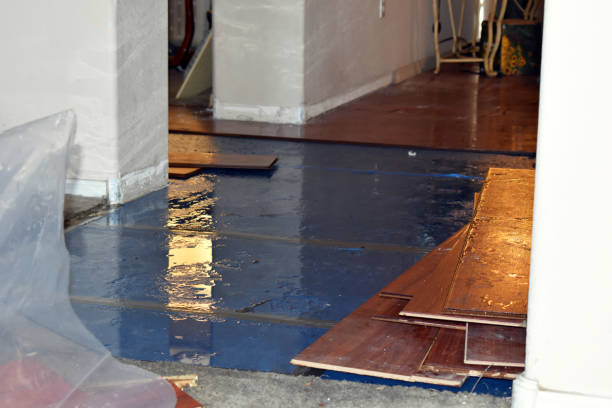
A washing machine hose lets go at 2am and suddenly your Freeport laundry room is underwater — that's the exact moment our dispatch line is built for, with a technician routed before you've finished mopping the first puddle.
Call +1-844-578-1604
Crews staged inside Freeport limits
Flat-rate quote before any equipment runs
IICRC-certified technicians on every truck

We run our Freeport operation on IICRC-certified technicians and commercial-grade equipment, not a subcontractor list we pull from when the phone rings.
Local pricing means local pricing — our Freeport estimates reflect actual regional labor and material costs, not a national average that leaves you either overpaying or underinsured.
Ongoing training matters more to us than a certificate on the wall — drying standards and equipment change, and our crews train against the current standard, not the one from five years ago.
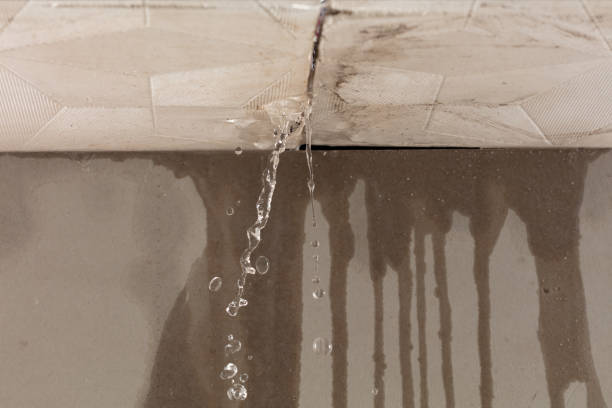
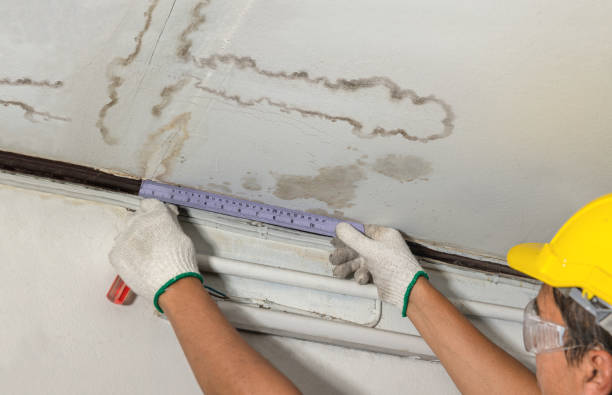
Not every water problem announces itself with a flooded floor. Most start quietly, and catching one of these signs early is usually the difference between a same-day fix and a much bigger repair.
Fresh paint over an old stain can hide the problem visually for a month or two, right up until the drywall paper backing gives out.
A musty note that wasn't there a season ago usually means microbial growth has started somewhere behind a wall or under flooring, well before you can see anything.
A hollow sound from tile that used to sound solid usually means the mortar bed lost adhesion from sustained moisture underneath.
A sudden increase in usage with no change in household habits is often the earliest sign of a slab leak, well before any visible water shows up.
Wallpaper that suddenly lifts at the seams after holding fine for years often signals a change in the humidity or moisture level inside that wall cavity.
A small patch of mold in a corner or along a baseboard means conditions behind that surface have supported growth for a while — the source needs to be found, not just wiped away.
Catching two or more of these signs at once usually means it's past time for a proper inspection.
Treating Structural Drying as a single continuous job, rather than a series of handoffs, is what keeps timelines shorter and documentation consistent.
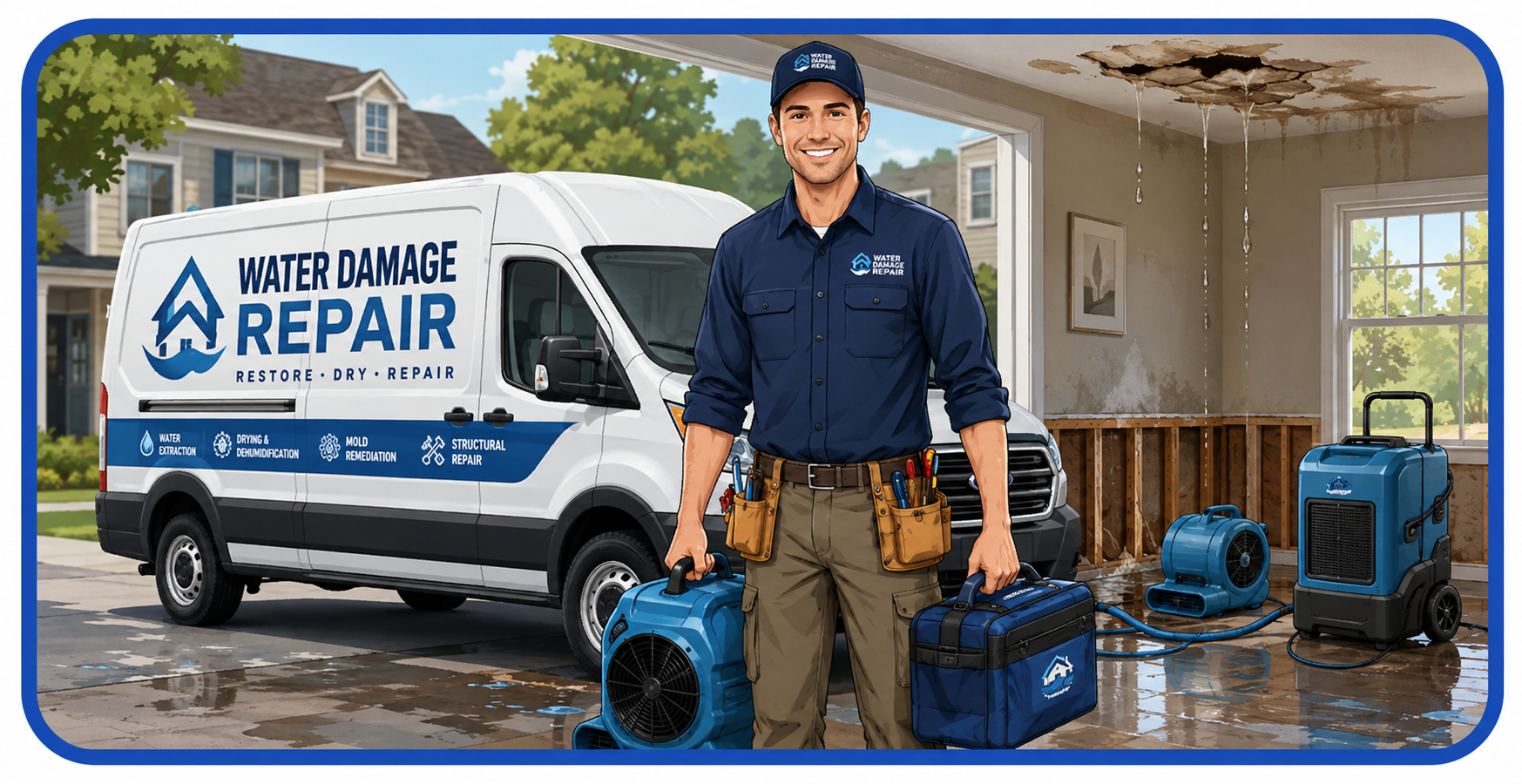
The equipment on our trucks scales up or down to the job, but the process — assess, extract, dry, verify, repair — doesn't change.
We treat extraction speed as the single biggest variable we control — every additional hour of standing water raises the odds of secondary damage.
We don't call a structure dry based on a visual check — the moisture meter has the final say before equipment comes down.
Blackwater intrusions call for full PPE, controlled removal of porous materials that can't be sanitized, and hospital-grade disinfection before any reconstruction starts.
We treat the 48-hour mold window as a deadline for our own drying timeline, not a talking point.
Once moisture readings confirm the structure is dry, the same team that documented and dried the loss hands off directly into drywall, insulation, and flooring repair.
We inventory and relocate contents that need to leave the affected area, then coordinate their return once the space is verified dry.


This is the same sequence every job follows, whether it's a single flooded room or a full commercial loss.
A live dispatcher, not a voicemail tree, takes your call and asks a few quick questions about the source and severity so the crew rolls out prepared.
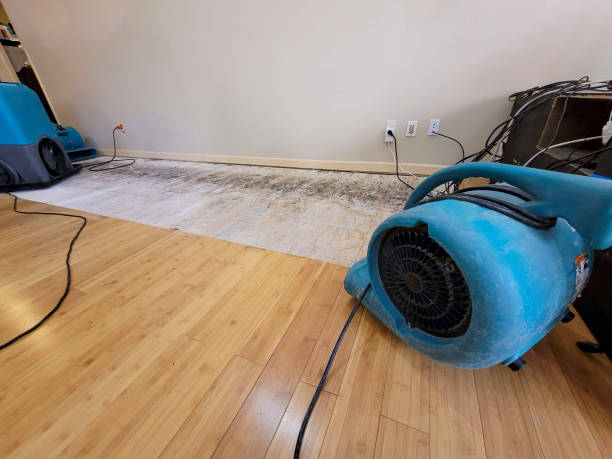
Moisture meters and thermal cameras trace exactly how far water has traveled, including inside walls and under flooring where it's invisible to the eye.
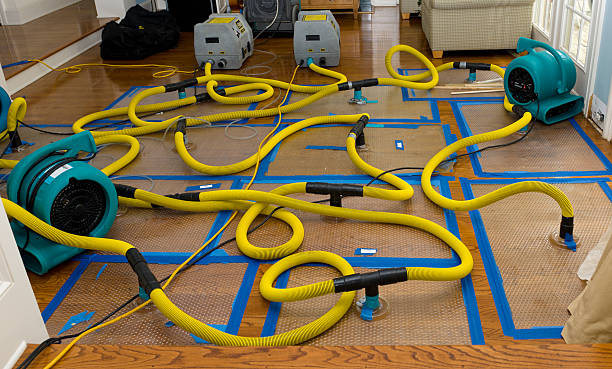
Standing water comes out first with commercial extraction equipment, then air movers and dehumidifiers go to work based on the readings just taken.
Final verification is where corners often get cut industry-wide; we treat it as mandatory.
None of these four things matter in isolation — it's the combination of licensing, speed, honest pricing, and a real guarantee that actually changes the outcome of a water emergency.
Licensing and insurance aren't paperwork we keep in a drawer; they're what let us stand behind the work if something doesn't go as planned.
Regionally staged trucks mean a crew often arrives before a national chain's call center finishes the intake questionnaire.
You get a written estimate before equipment turns on, not a surprise invoice after the fact.
If a drying target isn't hit on schedule, equipment stays on-site at no extra charge until the readings confirm it's dry.
We'd rather run a dehumidifier an extra day on our dime than sign off on a reading we're not confident in.
Technicians aren't rewarded for closing jobs quickly, which keeps the incentive pointed at actually finishing the drying right.
Call +1-844-578-1604Our Freeport service radius covers 61032, with trucks positioned to reach any address quickly, not just the neighborhoods closest to a single office.
Coverage extends past the city core into the surrounding Freeport suburbs, so an outlying address isn't treated as a second-tier call.

"What stood out was how calm the technician stayed while explaining a genuinely stressful situation — that mattered more than I expected."
Renee A., Freeport"A storm backed water into our finished basement and the crew classified it, extracted it, and had dehumidifiers running that same afternoon. The invoice matched the quote to the dollar."
Owen D., Freeport"They didn't cut corners on the sanitization step even though it clearly slowed them down — with two kids in the house, that mattered to us."
Fatima J., Freeport"Fast response and clear pricing, and they handled the back-and-forth with my insurance adjuster directly, which saved me a genuinely stressful week."
Lucas P., Freeport"Getting a daily drying log meant we always knew where the job stood instead of a vague verbal update."
Grace T., Freeport"Working a commercial job around our business hours could have been a scheduling nightmare, but they made it simple."
Nathaniel W., Freeport"A cracked supply line under our kitchen sink went unnoticed for days, and by the time we called, the subfloor was saturated. They only replaced what actually tested wet, not the whole floor."
Bianca H., Freeport"They explained the crawl space drainage issue in plain terms instead of technical jargon, and fixed it on the spot rather than scheduling a separate trip."
Derek S., Freeport"They found the actual source of the leak instead of just drying the surface damage, which saved us from the same problem happening again in a month."
Melissa C., Freeport"A dishwasher supply line failed while we were on vacation and came home to a soaked kitchen floor. They handled the extraction, drying, and coordination with our property manager without us having to fly back early."
Victor N., Freeport